
5 Things Book Pirates Tell Themselves (And Why They’re Wrong)
Every week, we send DMCA takedown notices on behalf of indie authors whose books and audiobooks have been uploaded illegally to YouTube, file-sharing sites, and piracy forums. And every week, we hear the same handful of excuses from the people doing the uploading.
These aren’t sophisticated legal arguments. They’re rationalizations—stories people tell themselves so they can keep doing what they’re doing without feeling bad about it.
Let’s walk through the five most common ones.
1. “It’s Public Domain—Anyone Can Share It.”
This is probably the most confidently wrong thing we hear. A book doesn’t enter the public domain just because it exists on the internet, or because someone found a digital copy, or because they personally think information should be free.
Copyright is automatic. The moment an author writes something down, it’s protected. There’s no registration requirement, no special symbol needed, no magic words. Under current U.S. law, that copyright lasts for the author’s lifetime plus seventy years.
That romance novel published last year? It won’t enter the public domain until sometime in the twenty-second century.
The word “public” in “public domain” doesn’t mean “available to the public.” It’s a specific legal status that applies to works whose copyright has expired, been forfeited, or was never eligible for protection in the first place. Shakespeare is public domain. The book you downloaded from a pirate site last Tuesday is not.
2. “I Got It Free, So I Can Share It”
This one comes in several flavors: “I got it from the library.” “It was free on Kindle.” “The author gave it away in a promotion.” “Someone sent it to me.”
None of that matters.
How you acquired a copy has nothing to do with whether you have the right to redistribute it. When you borrow a library ebook or audiobook, you’re accessing it through a licensed platform with strict digital rights management. When an author runs a free promotion on Amazon, they’re offering individual downloads through a platform they’ve authorized—not granting the world permission to re-upload the file everywhere.
Think of it this way: a store gives out free samples of cheese. That doesn’t mean you can back a truck up to the loading dock and start handing out wheels of brie in the parking lot. The freebie was offered under specific terms and through a specific channel. Taking it outside those terms isn’t clever. It’s infringement.
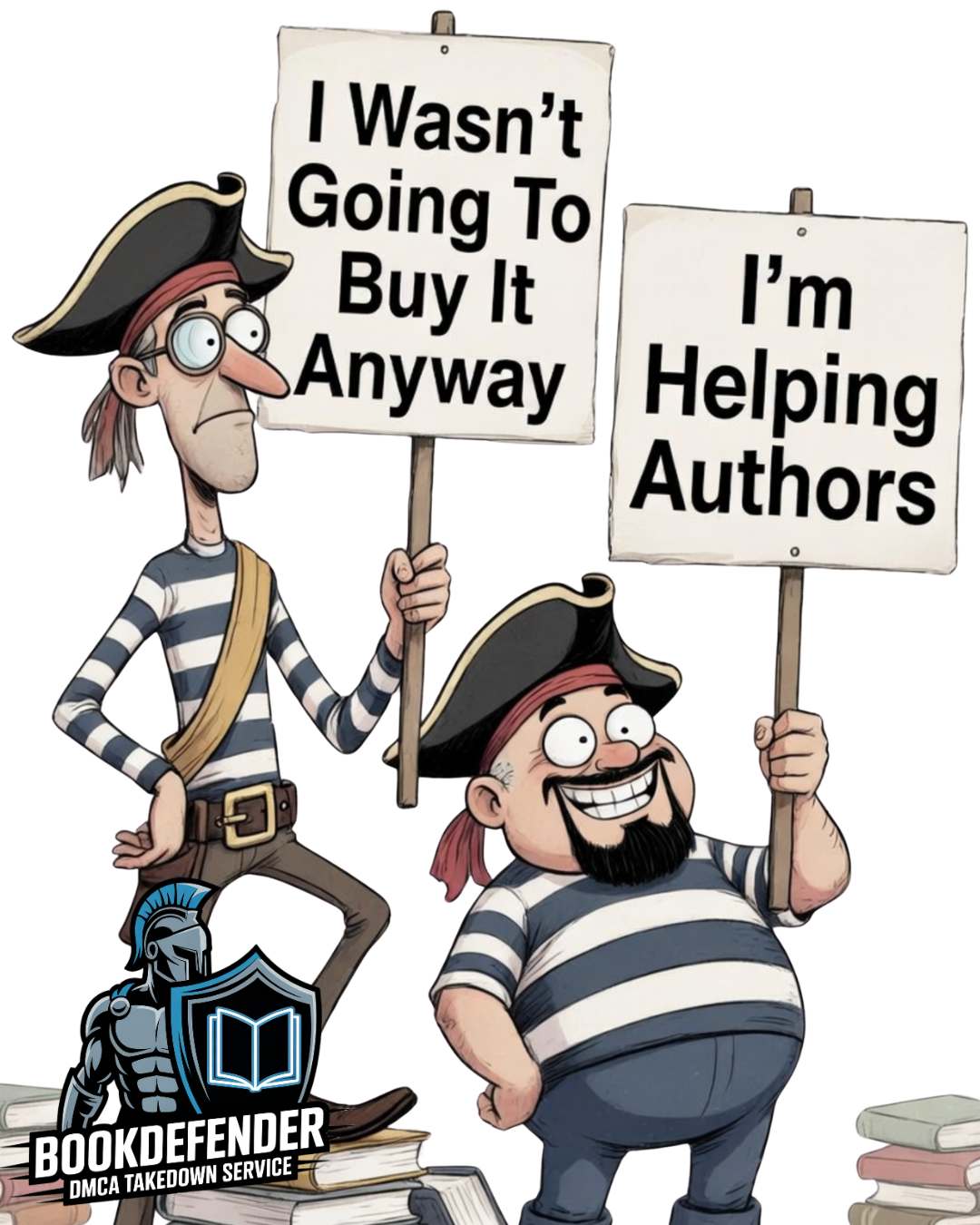
3.“I Wasn’t Going to Buy It Anyway, So the Author Didn’t Lose a Sale”
This is the all-time classic. The crown jewel of pirate logic.
Here’s why it falls apart: copyright isn’t about whether a specific sale was lost. It’s about the author’s exclusive right to control how their work is distributed. That right exists whether or not you, personally, would have paid for the book.
But let’s engage with the logic for a moment anyway, because it doesn’t hold up even on its own terms.
When a pirated copy is available for free, it doesn’t just replace your potential purchase—it replaces purchases from people who would have bought it. Every free illegal download sitting on a piracy site or a YouTube channel is competing with the legitimate product. Some percentage of the people who find that free copy would have paid for it if the free option didn’t exist. The author will never know how many, but the damage is real and cumulative.
And here’s the part pirates never want to hear: even if we accepted the premise that no sale was lost—which we don’t—it still wouldn’t matter. You don’t have the right to distribute someone else’s work without permission. Period. The absence of a lost sale doesn’t create the presence of a right.
4.”I’m Giving the Author Free Exposure”
Ah, yes. The “exposure” argument. Authors love this one. (They don’t.)
Let’s be clear about what’s actually happening when someone uploads a full audiobook or ebook to YouTube or a file-sharing site: they’re giving away the entire product. That’s not exposure. That’s distribution. The author’s finished, complete work—the thing they spent months or years creating, the thing that pays their bills—is now available for free to anyone who wants it, with zero compensation going back to the creator.
Exposure is a book review. Exposure is a recommendation on social media. Exposure is someone saying, “Hey, you should check out this author.” Exposure is not uploading the entire work to a platform where anyone can consume it without paying.
Authors get to decide how they market their books. They get to decide when to run promotions, where to distribute free copies, and how to build their audience. When a pirate makes that decision for them, it’s not generosity. It’s theft dressed up in a compliment.
5.“You Can’t Stop Piracy, So Why Bother”
This is the nihilist’s version of an excuse, and it’s the one that frustrates authors the most, because it’s often delivered with a shrug and a smirk—as if the futility of total eradication somehow makes individual acts of piracy acceptable.
You can’t eliminate car theft, either. That doesn’t mean we stop locking our doors, and it definitely doesn’t mean car thieves get a moral pass.
The reality is that DMCA takedowns work. They get infringing content removed from search results, pulled from YouTube, and deleted from file-hosting sites. They make pirated content harder to find. They disrupt the casual pipeline where someone Googles an author’s name and finds a free illegal download before they find the legitimate product.
No, we can’t stop every instance of piracy worldwide. But we can make it significantly harder, and we can protect the authors who rely on book sales to make a living. That’s not futile. That’s the job.
The Bottom Line
Book piracy isn’t a victimless act and it isn’t a gray area. Authors—particularly indie authors who don’t have a traditional publisher’s legal team behind them—bear the full cost of piracy in lost revenue, lost visibility, and lost time spent chasing down illegal copies instead of writing.
If you’re an author dealing with piracy and you’re tired of playing whack-a-mole on your own, that’s exactly why BookDefender exists. We handle the takedowns so you can get back to writing.
And if you’re someone who’s been sharing books you didn’t have the right to share? Now you know. The excuses don’t hold up. They never did.
BookDefender provides human-verified DMCA takedown services specifically designed for indie authors. Learn more at bookdefender.com